
Affirmation. Service. Time. Touch. Gifts.
What do these five words have in common? According to author and pastor Gary Chapman, more than you might think! In fact, each speaks to one of five ways human beings express and experience love. What’s more, these cornerstone principles of connection are shockingly useful when it comes to crafting personalized, memorable wedding vows that feel true to your and your partners’ hearts.
If you’ve yet to uncover your love language, I highly recommend that you and your spouse-to-be each take the official 4 minute Love Language quiz, linked here. The results will contain invaluable insights you’ll carry not just through the process of writing your vows, but through the rest of your lives.
Words of Affirmation
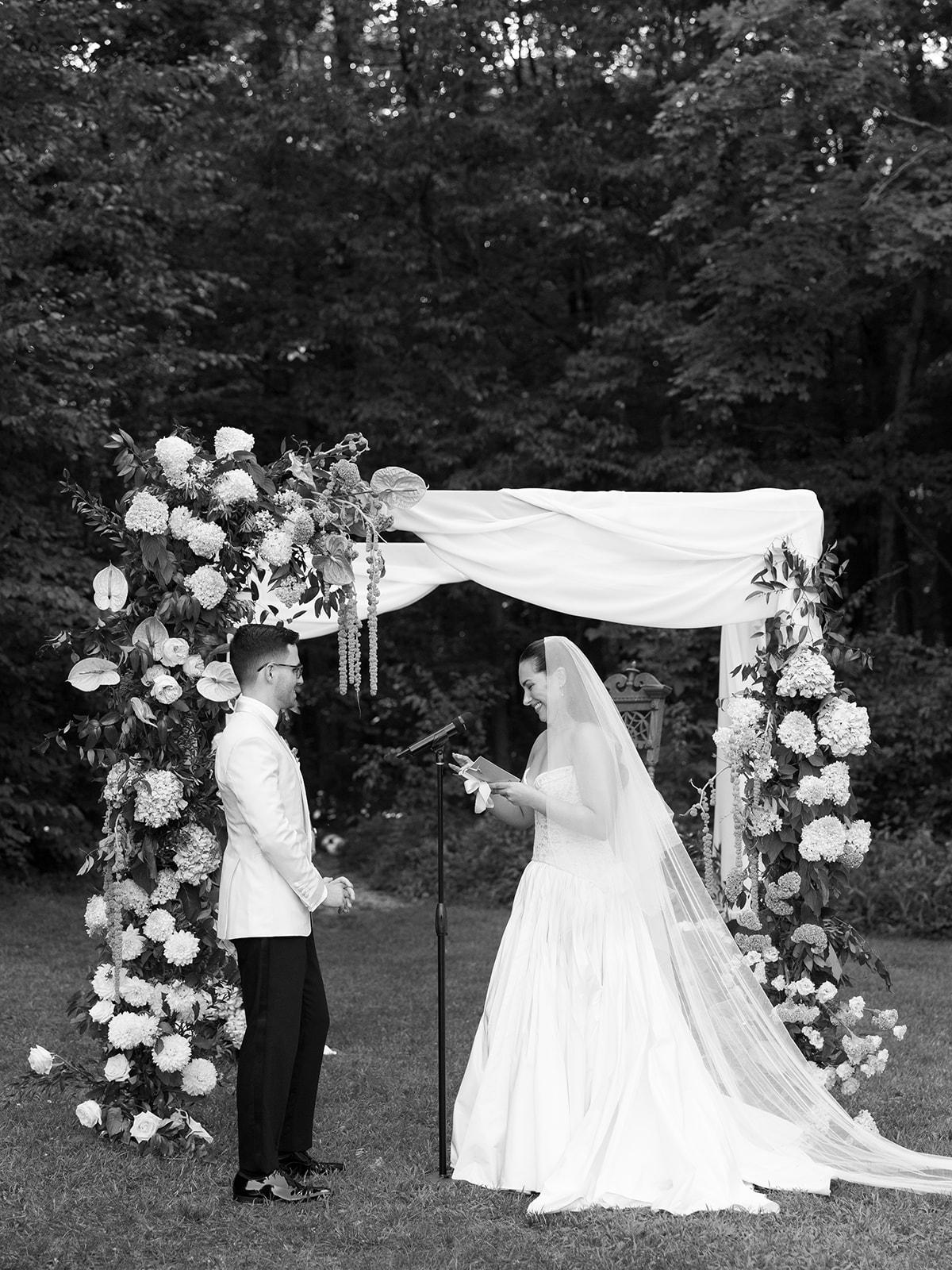
We’ll begin with the love language which most directly translates to writing one’s vows — Words of Affirmation. If your partner feels most loved when they are complimented, encouraged, and verbally affirmed, your wedding vows are the perfect place to emphasize your love for them through the spoken word. This is the time to instill courage, to speak with tenderness, and to explain, in detail, each of the qualities that makes your partner the person for you.
A brief example:
“I deeply admire your ambition, the way you set your sights on a goal and stop at nothing to achieve it.”
Acts of Service
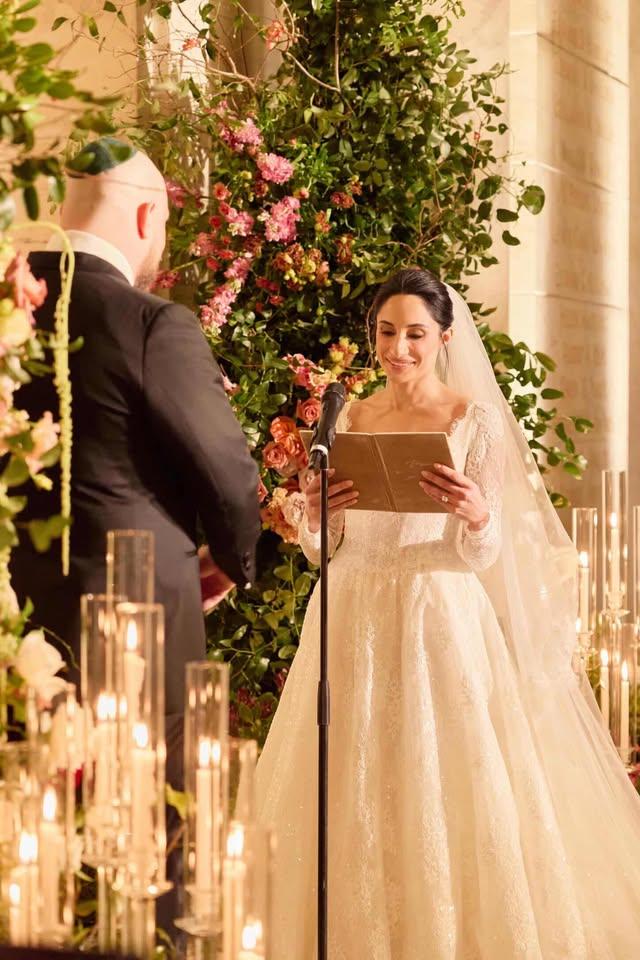
If your partner’s love language is Acts of Service, specificity and repetition of intention will become your best friends as you write your vows. Those who fall under the Acts of Service umbrella appreciate actions far more than words — for them, it is all about sharing in the monotonous tasks of daily life, about going out of your way to do something you know the other will appreciate and benefit from. To express this love language through the written word, focus on sharing all the ways you’ve tried to show up for your partner in your relationship thus far. Then, shift your focus to the specific ways you plan to show up for them in marriage. This can be anything from serving your partner a latté in bed every morning to promising you’ll change every diaper past 8pm — anything, really, that will make them feel seen.
A brief example:
“In marriage, I promise to always keep your glass full — literally and figuratively. I promise to wash the dishes every time you make your famous vodka pasta, and to take any last minute grocery store trips in stride.”

Quality Time
Like Acts of Service, Quality Time is all about what you do rather than what you say. For these people, time spent together — whether it be a strenuous physical activity or a quiet evening in — is what matters most. If your partner resonates with Quality Time as a love language, remember that there doesn’t always have to be movement, excitement, or even a real purpose. The only requirement is your undivided physical, mental, and emotional attention. Appealing to this love language in your vows may mean recalling short anecdotes from the time you’ve spent together, or proposing new ways you plan to spend your time as a married couple. The most important piece here is presence — emphasizing that you recognize and appreciate how much joy it brings your partner to simply spend their life by your side.
A brief example:
“With you, every moment is magic. Everything from skydiving in the Swiss Alps to binging the latest season of Love Island leaves me feeling joyful and fulfilled.”
Physical Touch
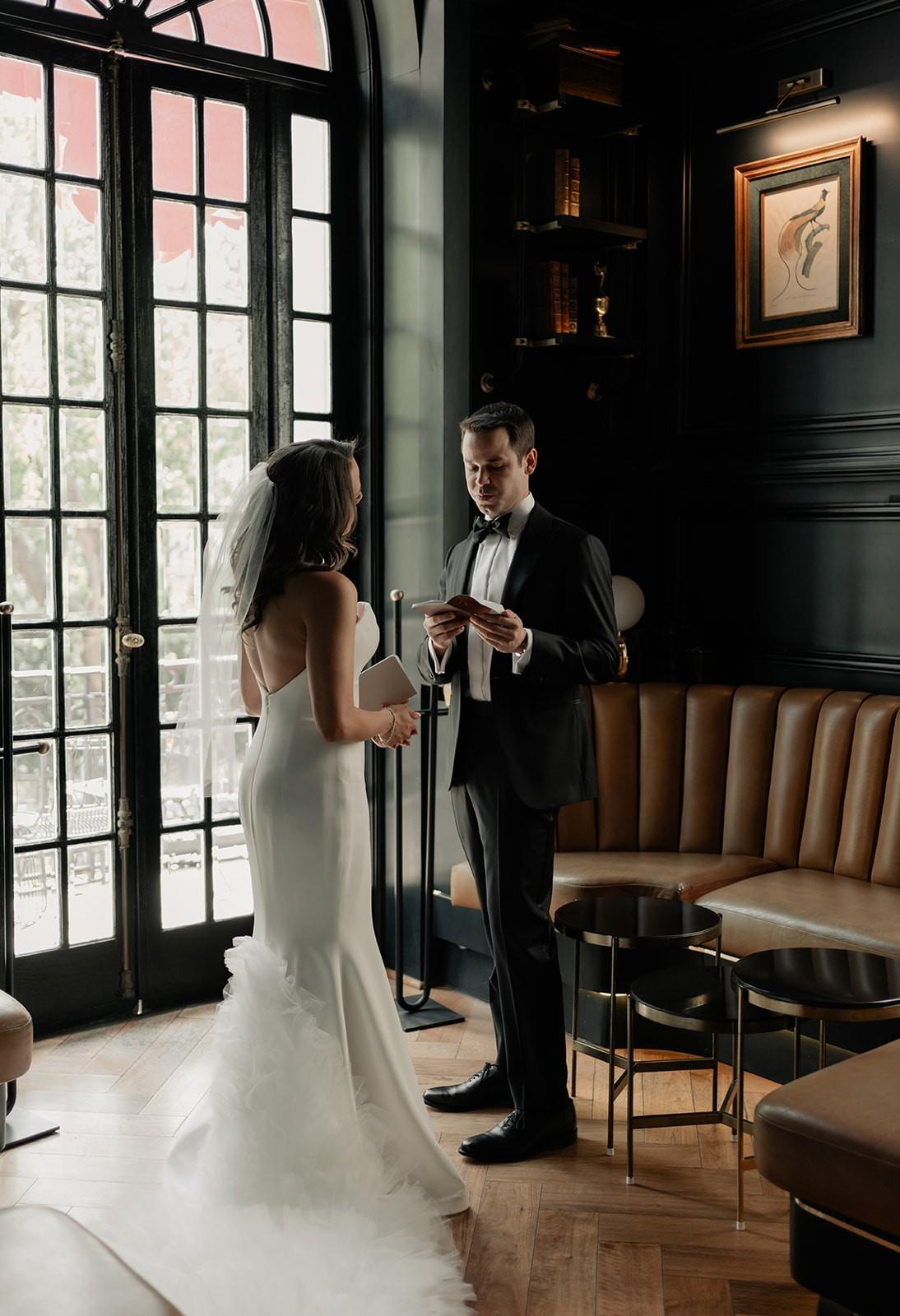
The Physical Touch love language is perhaps the most straightforward of the five: love expressed through intentional, comforting, and affectionate physical contact. A warm hug, a reassuring pat on the arm, a gentle back scratch — for these individuals, each can contain emotional multitudes. If your partner is one such individual, it may be best to approach your vows by explaining specific emotional scenarios you may encounter during your marriage — navigating grief, standing by one another through physical exhaustion, etc. — and the ways you would use physical touch to show them your love in those scenarios. A simple promise that you will give your person a shoulder rub whenever they have a long day at work may very well mean the world.
A brief example:
“In moments of turmoil, I promise to be your shoulder to lean on. I promise to wipe your tears, to hug you tight, and to never let go.”
Gifts
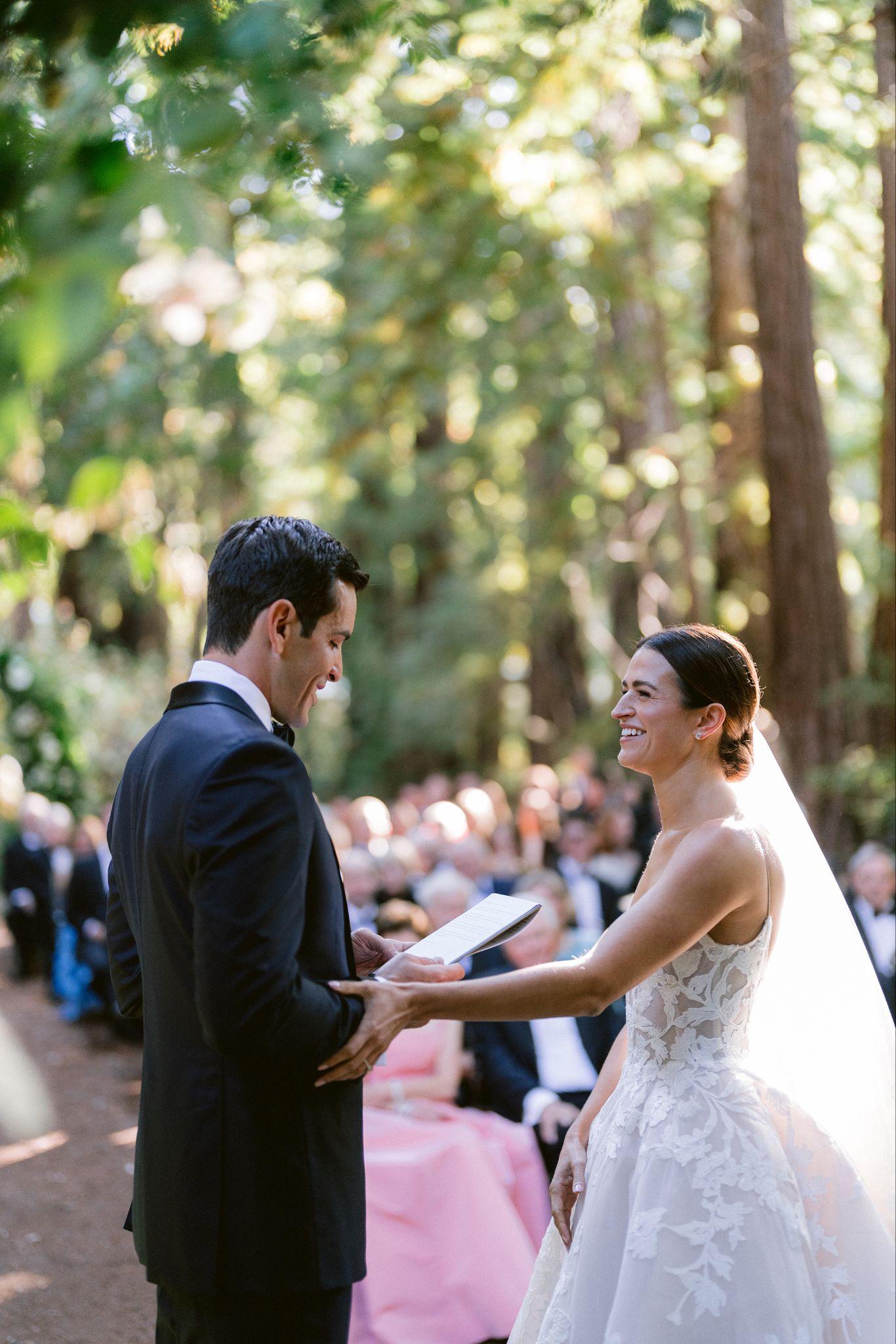
We end our journey through Chapman’s love languages with Gifts. A partner whose love language is gifts finds tremendous comfort and joy in things that are tangible. These gifts needn’t be expensive — though they certainly can be! The value of a gift lies in 1) the efforts taken to procure it and 2) the way the gift is tailored to the personality/preferences of the recipient. To translate this love language into your vows, consider telling your love story through things rather than moments — the sunglasses you bought for them during your first trip abroad together, the Spotify playlist you made for their long drives home, the personalized mug you ordered featuring one of their favorite The Office quotes… any physical item you can use to track and retell your story.
A brief example:
“Our story began with a small bouquet of wildflowers you picked on the side of the highway as an apology for being late to dinner. When I saw those delicate blooms clasped between your fingers, I just knew we were meant to be.”
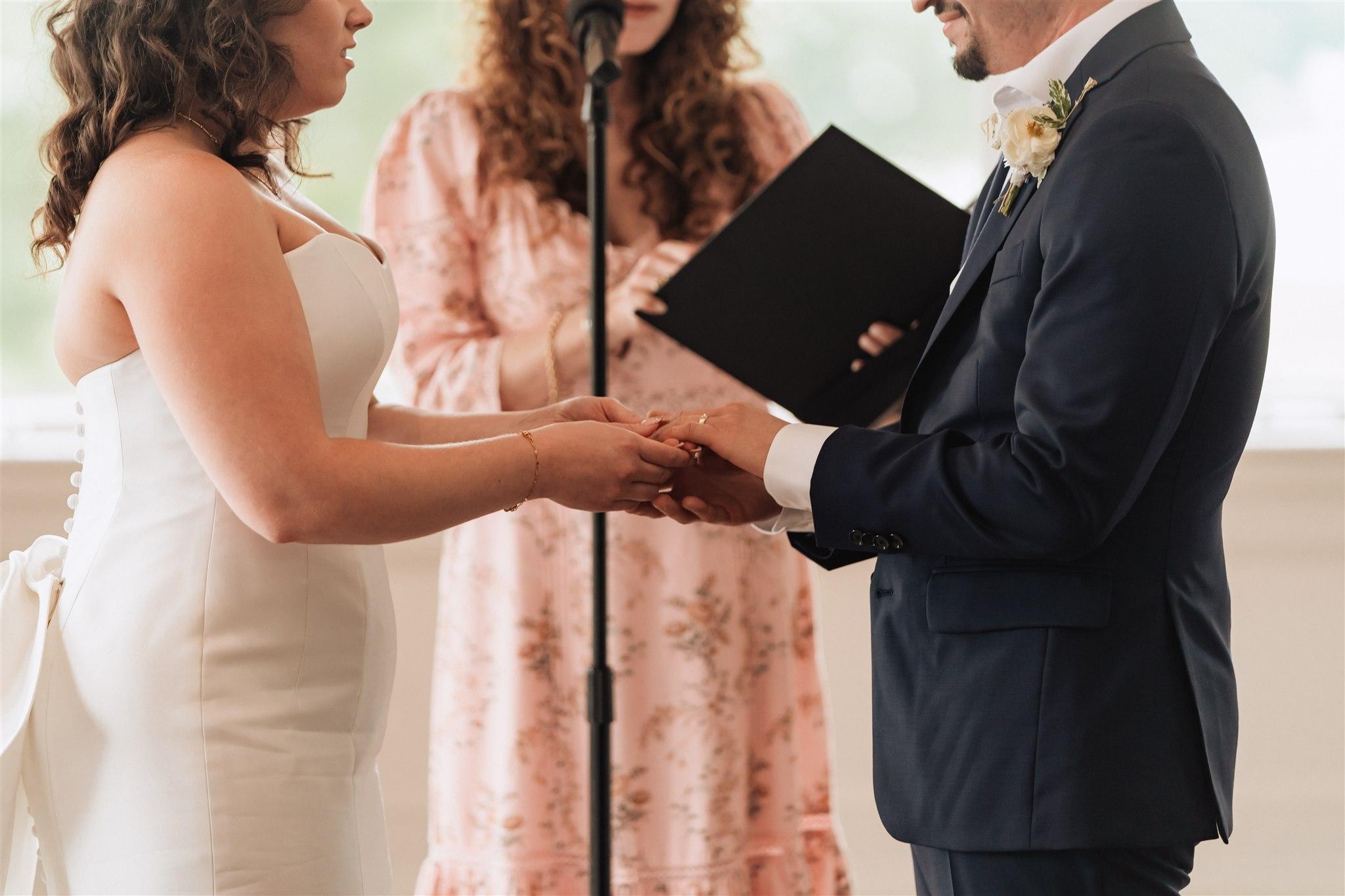
Now that we’ve covered each of the five love languages, I hope you feel one step closer to crafting wedding vows that feel unique, that capture the ways each of you gives and receives love in this life. So please: don’t fall for the generic, fill-in-the-blank vow templates — and definitely don’t trust A.I. to bring your love story to life! Instead, trust in your heart, in your partner’s heart, and in the language of your one-of-a-kind love.


@thevowwhisperer
Crafting Heartfelt Words Into Unforgettable Memories
Serving in Destinations Around the World
Crafting Heartfelt Words
Into Unforgettable Memories
Serving in Destinations Around the World